
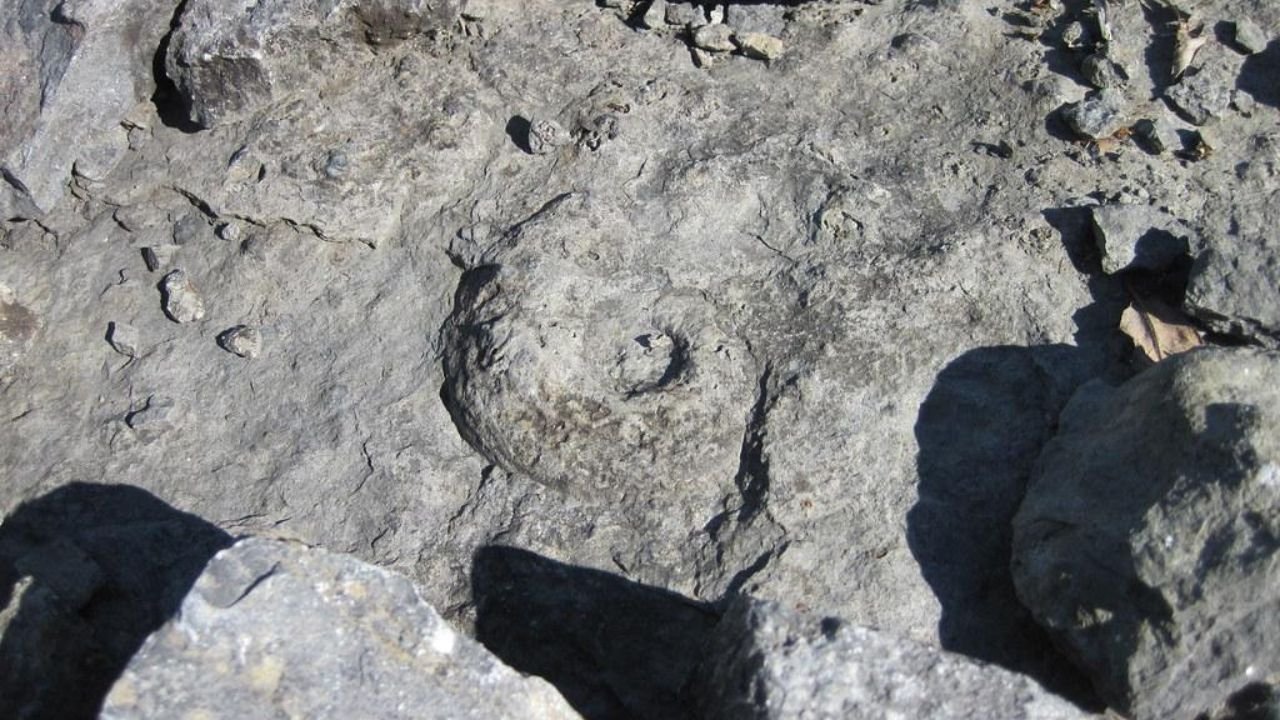
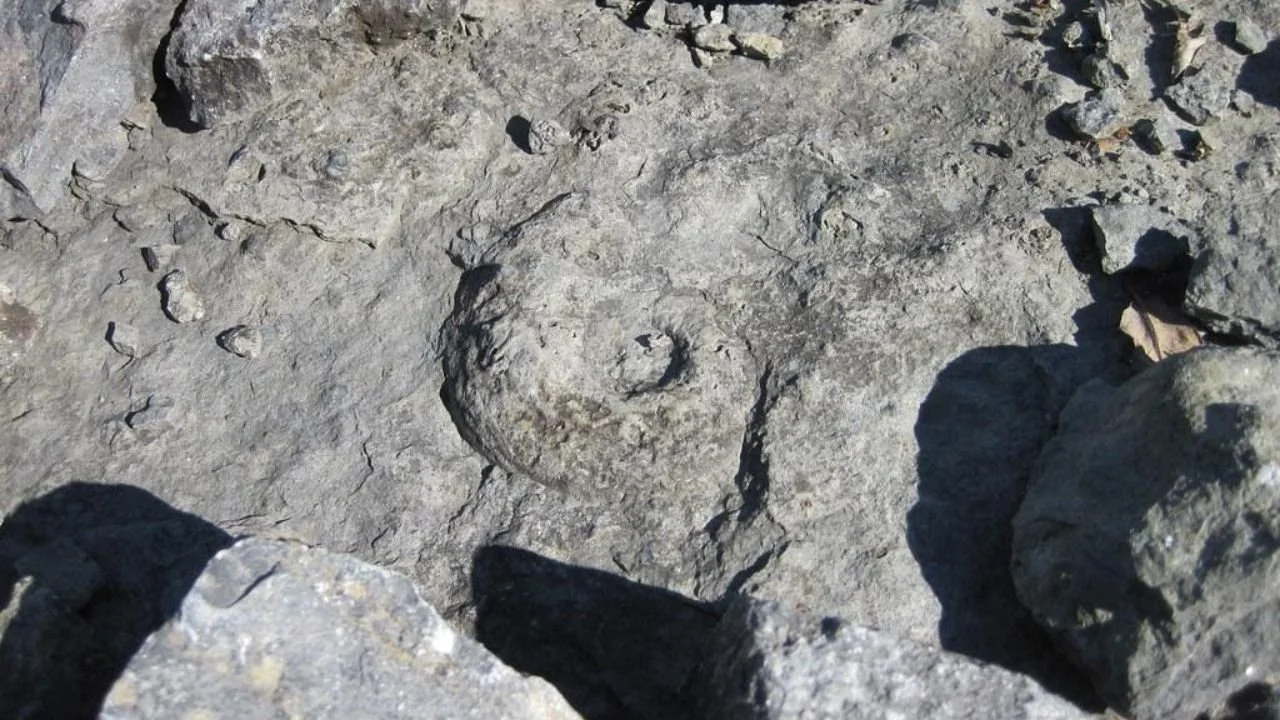
The Fisk Quarry Preserve is a 20-acre protected fossil site on Isle La Motte, Vermont, that contains exposed sections of the Chazy Fossil Reef, one of the oldest known community-built reefs on Earth. Formed roughly 450 to 480 million years ago during the Ordovician Period, the reef has been designated a U.S. National Natural Landmark and draws geologists from around the world who come to study its remarkably intact fossil record. The preserve is open year-round, dawn to dusk, and there is no admission fee.
For anyone staying on Lake Champlain and looking for a day trip that goes beyond beaches and boat launches, this place is something else entirely. It sits just a short drive from Alburgh through the Champlain Islands, and honestly, it is the kind of attraction that catches most people off guard. What looks like a quiet, overgrown quarry at first glance turns out to be a window into a world that existed hundreds of millions of years before dinosaurs even showed up.
A Quick Snapshot of the Preserve
Here’s what visitors should know at a glance:
| Detail | Info |
|---|---|
| Location | 4088 West Shore Road, Isle La Motte, VT |
| Size | 20 acres |
| Age of fossils | Approximately 450 to 480 million years old |
| Designation | National Natural Landmark (designated May 2009) |
| Hours | Dawn to dusk, year-round |
| Admission | Free |
| ADA accessible | Yes |
| Managed by | Isle La Motte Preservation Trust |
The Geology Behind the Fascination
So why do geologists keep coming back here? The short answer is that this quarry holds exposed layers of the Chazy Fossil Reef, and it is the oldest known reef built by a community of different organisms rather than just a single species. That distinction matters hugely in paleontology. A few older reefs exist elsewhere, but those are single-species structures. The Chazy Reef was the first to show biological diversity, the kind of cooperative, multi-species ecosystem that eventually led to modern reef systems like the Great Barrier Reef (which is only about 8,000 years old by comparison).
Back when this reef was forming, Vermont was nowhere near where it sits today. The land that became Isle La Motte was located south of the equator, submerged beneath the warm, shallow waters of the ancient Iapetus Ocean. Atmospheric carbon dioxide levels were 14 to 16 times higher than they are now.
Over millions of years, organisms like bryozoa, stromatoporoids, and early corals built up the reef structure layer by layer. When those creatures died, their shells accumulated on the ocean floor. Eventually, tectonic forces pushed the whole formation northward and tilted it slightly.
And that tilt is precisely what makes Isle La Motte so valuable. In places like Tennessee, where sections of the same formation exist, the reef lies flatter and is much harder to read. But here, the gentle uplift has exposed different layers of the reef at the surface. Geologists can literally walk across the progression of life from the oldest layers to the youngest. Dr. Charlotte Mehrtens, a geology professor at the University of Vermont who studied the reef for decades, once noted that walking through the Goodsell Ridge portion was similar to snorkeling over the reef 480 million years ago.
What Fossils Can Visitors See?
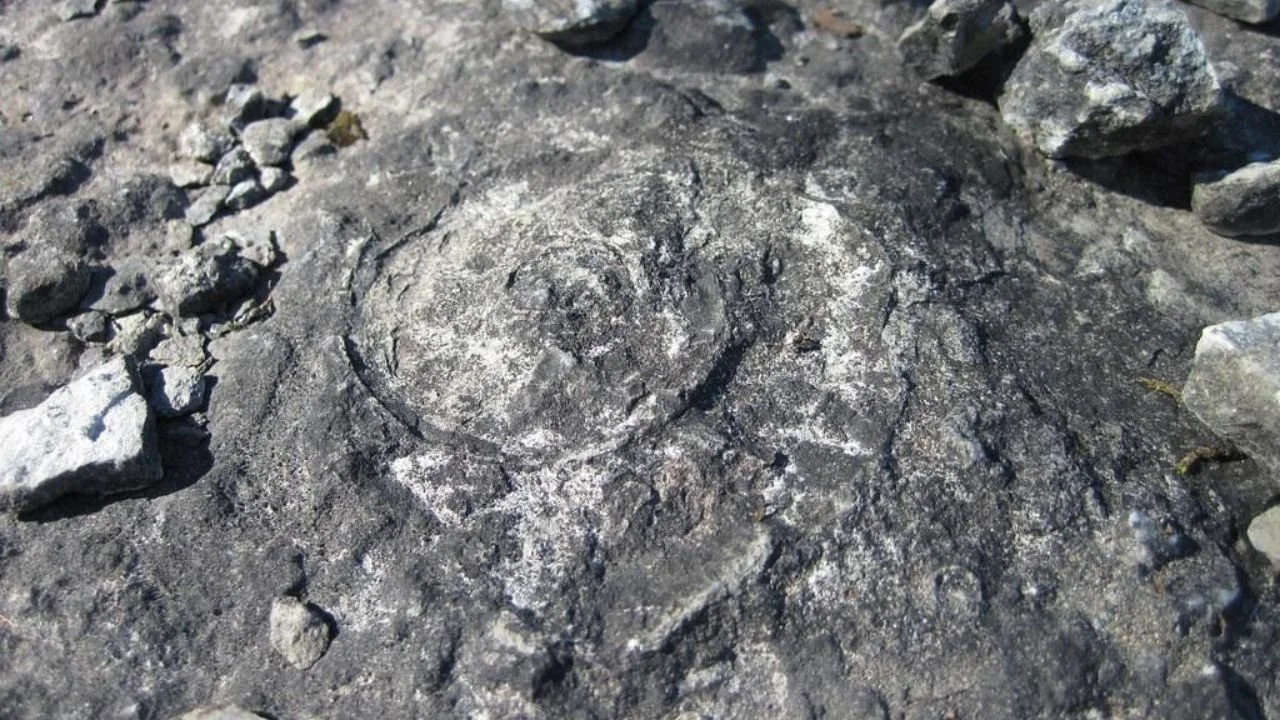
The Fisk Quarry Preserve is packed with visible fossils, many embedded right in the quarry walls and floors. Here are the key types visitors encounter:
Stromatoporoids - Ancient sea sponges that appear as white forms in the dark quarry walls. These were among the reef’s primary builders.
Gastropods - Spiral-shaped fossils sliced into the black limestone. Some are as big as a playing card; others require a magnifying glass.
Bryozoa - Tiny colonial organisms that stabilized the muddy ocean bottom and helped the reef grow upward.
Cephalopods - Coiled relatives of modern squid and nautilus, some of which grew surprisingly large.
Trilobites - Segmented arthropods that crawled through the reef’s living matrix.
Early corals - While not the dominant reef builders, the Chazy Reef holds the oldest known reef-building corals on the planet. A Harvard geologist in 1924 actually called it “the oldest coral reef in the world,” though modern scientists have refined that to “the oldest reef in which corals first appear.”
That level of diversity in one accessible location is what makes the site irreplaceable for research.
The Quarry’s Industrial Past
Here’s where the story gets even more interesting. Before this place became a preserve, it was an active quarry with a surprisingly famous resume. French soldiers first pulled stone from the site back in 1666 to build Fort St. Anne on the northwest side of the island. English settlers began formal quarrying operations around 1800, and the quarry was eventually owned by Nelson Fisk, who served as Vermont’s lieutenant governor from 1896 to 1898.
The dark limestone from Isle La Motte became commercially famous. The darker variety earned the trade name “radio black” because of its use in Radio City Music Hall. But that was far from the only landmark project. Stone from this quarry went into some of the most recognizable structures in the country:
Brooklyn Bridge
National Gallery of Art in Washington, D.C.
Vermont State Capitol in Montpelier
Michigan State Capitol
Radio City Music Hall in New York
The quarry closed around 1919 and sat dormant for decades. Then in 1995, a small company began cutting stone again, threatening to destroy the fossil record forever. That is when Linda Fitch, who owned the neighboring Fisk Farm property, sprang into action.
How the Preserve Was Saved
Linda Fitch heard drilling near her home on a quiet evening in August 1995 and realized the ancient reef was in danger. She organized a coalition of nonprofits, including the Preservation Trust of Vermont and the Lake Champlain Land Trust, and launched a years-long legal battle to stop the quarrying. By 1998, the Isle La Motte Preservation Trust had purchased the 20-acre parcel, and the Fisk Quarry Preserve became a protected site by 1999.
In 2009, the Chazy Fossil Reef (including Fisk Quarry and companion sites on multiple Lake Champlain islands) received its National Natural Landmark designation from the U.S. Department of the Interior. That recognition spans 1,567 acres across Isle La Motte, Valcour Island, and Garden Island.
What Else to See Nearby
The Fisk Quarry Preserve pairs perfectly with a visit to the Goodsell Ridge Fossil Preserve, located just two miles north. Goodsell Ridge covers 83 acres and features several miles of trails, interpretive signage at seven fossil discovery areas, and a Conservation Barn with exhibits and a short video telling the reef’s story. The barn is typically open from June to mid-October, though hours depend on volunteer availability.
Beyond fossils, Isle La Motte is a small, peaceful island, roughly three miles by seven miles, near where Lake Champlain flows into Quebec’s Richelieu River. St. Anne’s Shrine sits a few miles north of the quarry, and the whole island offers quiet roads perfect for biking or a slow scenic drive.
For a full list of outdoor activities and local attractions across the Champlain Islands, check out our Things to Do and Places to Go guide.
For visitors staying at lakefront accommodations in nearby Alburgh, the trip to Isle La Motte takes about 20 minutes by car. For visitors staying at lakefront cottages in Alburgh, the trip to Isle La Motte takes about 20 minutes by car. It makes for a relaxed half-day outing that works equally well for families, geology enthusiasts, or anyone who simply appreciates a good “hidden gem” moment.
Visitor Tips Before Heading Out
Park in the designated gravel lot along West Shore Road, south of Fisk Farm.
Stay on marked paths and do not remove any fossils or rock samples. This is strictly prohibited.
Bring a magnifying glass for spotting smaller fossil details in the limestone.
Wear sturdy shoes. The quarry floor is uneven stone with grass growing through the cracks.
Pair the visit with Goodsell Ridge for the full reef experience.
There are no restrooms or facilities at the Fisk Quarry Preserve.
FAQs
Where exactly is the Fisk Quarry Preserve located?
It is located at 4088 West Shore Road on Isle La Motte, Vermont, the northernmost island in Lake Champlain. The site is accessible year-round from dawn to dusk with free admission.
How old are the fossils at the Fisk Quarry Preserve?
The fossils are embedded in the Chazy Fossil Reef, which formed approximately 450 to 480 million years ago during the Ordovician Period. This makes them far older than dinosaurs, which appeared roughly 230 million years ago.
Can visitors take fossils home from the preserve?
No. Removing fossils, rock samples, or any natural material from the Fisk Quarry Preserve is strictly prohibited. The site is protected under a conservation easement co-held by the Lake Champlain Land Trust and the Vermont Housing and Conservation Board.
Is the Fisk Quarry Preserve worth visiting with kids?
Absolutely. The quarry floor is ADA accessible, no hiking is required, and children tend to love spotting the spiral gastropod fossils and giant cephalopod imprints in the stone. Pairing it with the nearby Goodsell Ridge trails and Conservation Barn makes for an engaging educational outing.